Self-Help summary
ملخص كتاب علم الانضباط الذاتي: أهم الأفكار والدروس
اقرأ ملخص كتاب علم الانضباط الذاتي مع أهم الأفكار والدروس العملية والنقاط الرئيسية في دقائق.
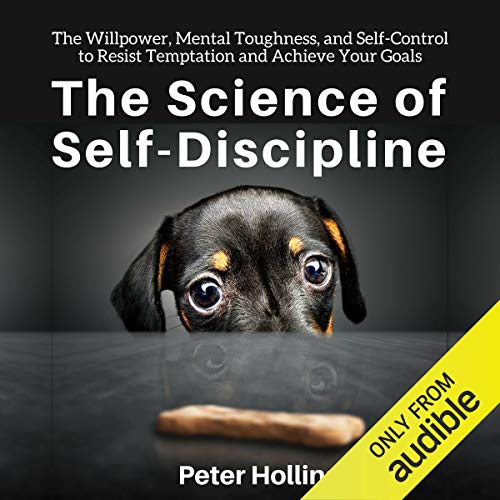
Author: Peter Hollins
Category: Self-Help
Published: 2017
Pages: 154
أهم الأفكار
- **Discipline is a Biological Battle**: The war between the Prefrontal Cortex (rational CEO) and the Limbic System (emotional child)—willpower is finite and depletes like glucose throughout the day (Ego Depletion).
- **Motivation is Unreliable**: Relying on motivation guarantees failure—discipline must become automatic through habit formation and environmental design, not emotional inspiration.
- **The 40% Rule**: When your brain screams 'stop,' you've only used 40% of your actual capacity—the 'governor' in your brain stops you prematurely to preserve energy; override it through mental fortitude.
- **The 10-10-10 Rule**: Combat Hyperbolic Discounting by analyzing decisions through three timeframes—how will I feel in 10 minutes, 10 hours, 10 years? This engages long-term planning over immediate gratification.
- **Design Your Environment**: You can't fight your environment forever—increase friction for vices (unplug TV, hide remote) and decrease friction for virtues (pack gym bag the night before).
- **Implementation Intentions (If/Then)**: Pre-program behavior with scripts like 'If it's 6 PM, then I put on running shoes'—this removes the need for in-the-moment willpower by having your past rational self make the decision.
عن هذا الملخص
The Science of Self Discipline: A Deep Dive Guide Author: Peter Hollins Role: Behavioral Psychology & High Performance Analysis Part 1: Executive Summary The Philosophy of the Disciplined Mind In a world designed to distract us, self discipline is not merely a virtue; it is the primary predictor of success, arguably more critical than intelligence or talent. Peter Hollins' The Science of Self Discipline dismantles the myth that discipline is a genetic trait reserved for the lucky few. Instead, he posits that discipline is a muscle —a biological mechanism that can be trained, fatigued, and strengthened. The core philosophy of the book rests on the tension between two competing systems in...