History summary
ملخص كتاب بنك أمريكا: أهم الأفكار والدروس
اقرأ ملخص كتاب بنك أمريكا مع أهم الأفكار والدروس العملية والنقاط الرئيسية في دقائق.
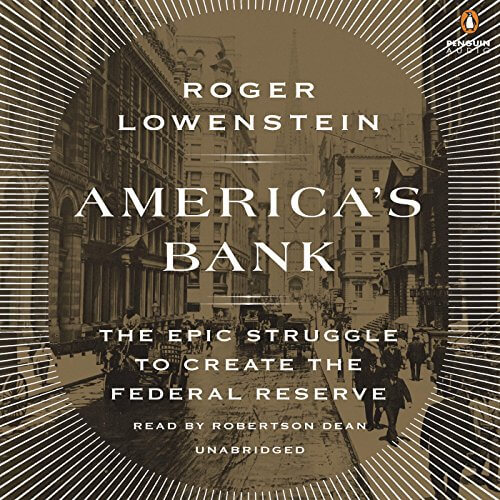
Author: Roger Lowenstein
Category: History
Published: 2015
Pages: 368
أهم الأفكار
- **The Central Paradox**: The tension between the economic need for centralization and the political desire for local control defined the creation of the Fed.
- **The Panic of 1907**: The financial crisis that exposed the weakness of a decentralized banking system and catalyzed reform.
- **Jekyll Island Meeting**: The secret meeting where bankers drafted the initial plan, fueling future conspiracy theories.
- **Paul Warburg's Role**: The intellectual architect who adapted European central banking principles for the US.
- **Woodrow Wilson's Compromise**: Creating a 'decentralized central bank' with public control (Board) and private ownership (Banks).
- **The Federal Reserve Act of 1913**: The legislative achievement that created the Fed, passed just before Christmas.
عن هذا الملخص
The Ghost of Andrew Jackson and the Birth of the Fed An Introduction to the Financial Wilderness To understand the gravity of Roger Lowenstein’s America’s Bank, one must first understand the paradox of the United States at the turn of the 20th century. By 1900, America was the world’s undisputed industrial colossus. It produced more steel than Great Britain and Germany combined; its railroads spanned a continent; its grain fed Europe. Yet, financially, the nation was living in the Stone Age. While European powers had long established central banks to manage their currencies and act as lenders of last resort—the Bank of England was founded in 1694—the United States had none. The reason was...